Window Treatments for Pasadena's Craftsman and Period Homes
The window treatments Pasadena's Craftsman and period houses want: inside mounts, woven and Roman shades and simple drapery. South Pasadena and San Marino too.
Of all window treatments Pasadena asks for the most restraint. The city holds one of the great collections of Arts and Crafts houses in California, and in such a house the window was finished long before we arrived: wide casings of fir or oak, small panes in the upper sash, now and then a panel of art glass. The task is to add privacy, shade and softness and to hide none of it. This guide sets out how we go about it in Pasadena, in South Pasadena and in the rather different houses of San Marino.
Why do Craftsman window treatments begin with the woodwork?
The Craftsman style flourished in Pasadena from about 1905 into the 1920s. The brothers Charles and Henry Greene practiced here, and their Gamble House still stands above the Arroyo. Bungalow Heaven, which became the city's first landmark district in 1989, holds more than a thousand houses, most of them bungalows of those years. In South Pasadena the Craftsman is the most common style in the historic neighborhoods. The windows are of wood, double hung or casement, and often set in pairs or in groups.
The people who built these houses had firm views on how to dress them. Gustav Stickley, whose magazine did much to spread the style, favored plain curtains of linen or cotton, hung from rings on a simple rod, not very full, and often stopping at the sill. The swags, cords and fringes of the Victorian window were shown the door. That is still the right instinct. The wood is the ornament, and whatever is added should be quiet enough to leave it so.
When will inside mount shades fit, and when will they not?
A shade mounted inside the frame sits between the casings and leaves all of the woodwork in view. It is our first choice in a Craftsman house, and it depends upon the frame.
- Depth. We measure from the face of the frame back to the sash at the shallowest point, since each kind of shade needs its own depth.
- Locks, lifts and cranks. The lock of a double hung sash or the crank of a casement may stand proud of the frame, and the shade must clear it.
- The way the window opens. A casement that opens inward would strike a shade set within its frame, and is dressed otherwise.
- Art glass and transoms. A fixed upper light of leaded or colored glass is best left uncovered, with the shade set beneath it.
Where the frame is too shallow, we mount the shade just above the head casing, so that when it is raised the wood is clear. The casings are then covered only when the shade is down, which is generally after dark.
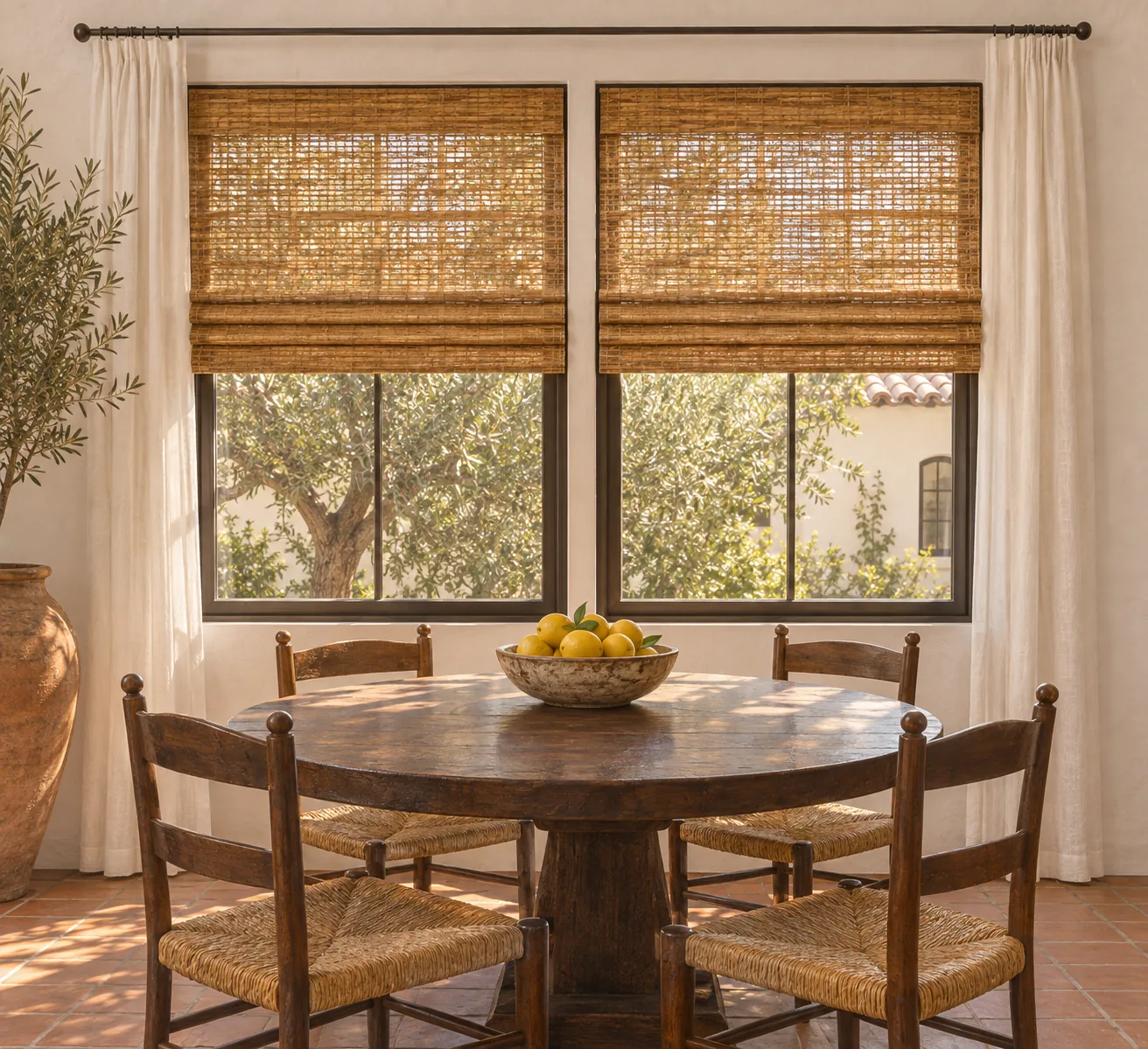
Woven wood shades or Roman shades in Pasadena?
Both belong, and the choice is one of texture. Woven wood shades are made of bamboo, reeds, grasses and jute, and they have the same handmade, natural character as the houses themselves. By day the light comes through the weave in a soft pattern. Unlined they give little privacy after dark, so for a room that faces the street we add a privacy lining, and for a bedroom a blackout lining.
A flat Roman shade is the quieter of the two. It lies flat when lowered and rises in plain horizontal folds, and in a natural cloth such as linen it is very close in spirit to the curtains of the period. Where an even plainer look is wanted, as in a kitchen or a bath, a light filtering roller shade does the work and all but disappears when raised.
What drapery suits a Craftsman house?
Simple panels on a slender rod of iron or wood, hung from rings. Where the wall allows, the rod runs wide enough for the panels to stand upon the plaster by day, clear of the casings. In a bungalow it often does not, since windows run into corners or sit between bookcases, and there a shade alone is the better answer. The cloth should be plain and of some substance, in an earthy color: a heavy linen, a cotton or a wool. It should also be lined. Pasadena has an average high of 89 degrees in July and August, and the valley sun is hard upon unprotected cloth. More is said under custom drapery.
How are old windows measured?
One at a time, and never on trust. A house of a hundred years has settled, and its windows are seldom quite square or quite alike. For a shade that is to sit inside the frame we take the width at the top, the middle and the bottom and work to the narrowest, so that the shade cannot bind. We take the height at the left, the center and the right, and compare the two diagonals to learn how far out of square the opening is. A small difference is absorbed. A large one argues for a mount above the casing, where no tapering gap will show. Every shade is then made to its own opening.
Do the same rules hold for window treatments in South Pasadena and San Marino?
In South Pasadena, very nearly. The houses are of the same years, with Mission Revival and Tudor among the Craftsman, and the first rule holds: leave the woodwork alone. We would add one courtesy to the street. A neutral lining behind every shade and panel lets the windows read alike from the sidewalk.
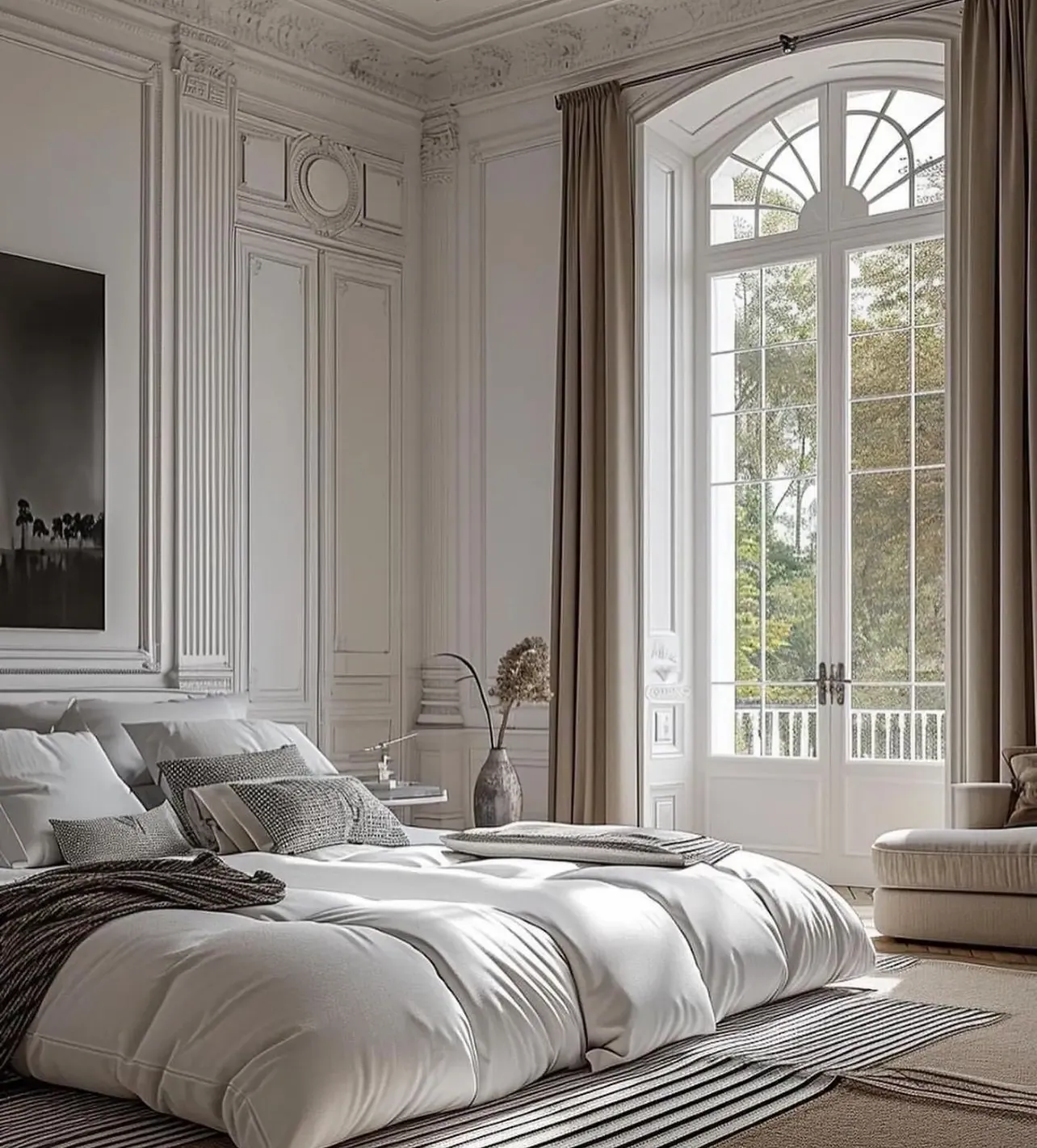
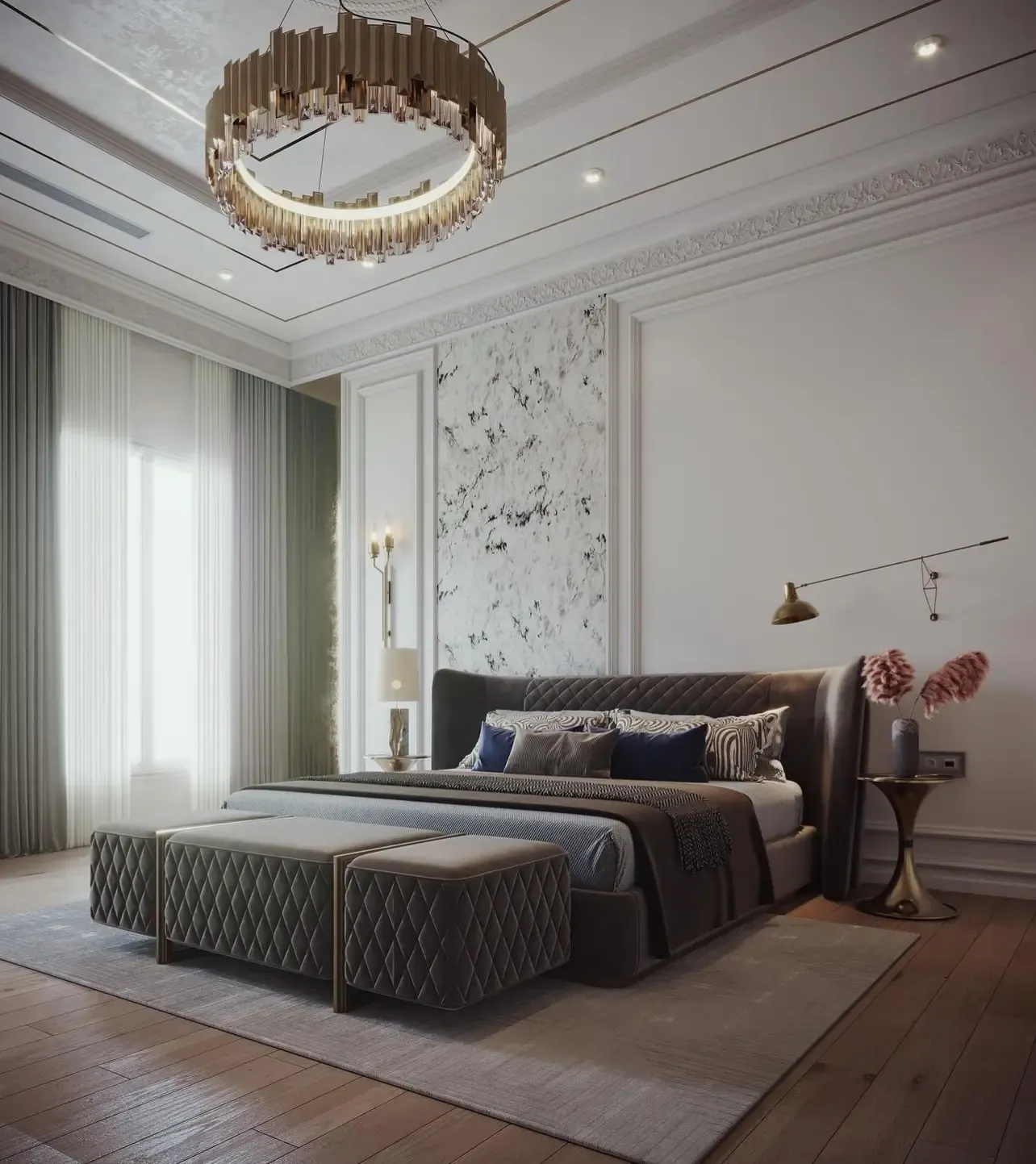
Window treatments in San Marino are another matter. The Georgian, Colonial, Monterey and Mediterranean houses, on the wide streets around the Huntington, were built for formal rooms, and those rooms want drapery made properly: lined and interlined panels with pleated headings, on rods and rings suited to the period. Roman shades dress the smaller windows, and painted shutters suit breakfast rooms, studies and baths. The period revival houses of Pasadena itself, in Oak Knoll, Madison Heights and San Rafael, are dressed in the same way. At an arched window the drapery is hung above the arch, or a shutter is shaped to it.
For window treatments Pasadena is also our home ground. Our office is at 153 East Walnut Street, Suite D, where visits are by appointment, and we are glad to bring samples of custom shades and cloth to the house. Diana Mendez, who leads the firm and is a textile expert, advises on the fabrics. Please request a consultation and she or one of her designers will be in touch to arrange it.
Questions and answers
What are the best window treatments for Craftsman homes?
Simple ones that leave the woodwork in view. We most often suggest woven wood shades or flat Roman shades mounted inside the frame, and plain lined panels on a slender rod where drapery is wanted.
Can shades be mounted inside the frame of an old window?
Usually, yes. The frame must be deep enough to hold the shade, and locks, lifts and cranks must be clear of it. Where it is too shallow, we mount the shade just above the head casing.
Do woven wood shades give privacy at night?
Not unlined. Light passes through the gaps in the weave, so a lit room can be seen from the street. A privacy lining screens the room, and a blackout lining darkens a bedroom.
How do you measure old windows that are not square?
We measure every window separately. The width is taken at the top, middle and bottom and the height at the left, center and right, and the diagonals are compared. Each shade is made to its own opening.
Would you like advice on your own windows?
Request a Quote →