Solar Shades in Malibu: Salt Air, Glare and Keeping the Horizon
Solar shades Malibu guide: which fabric tames the glare off the water and keeps the horizon, and which hardware and cloths stand up to salt air.
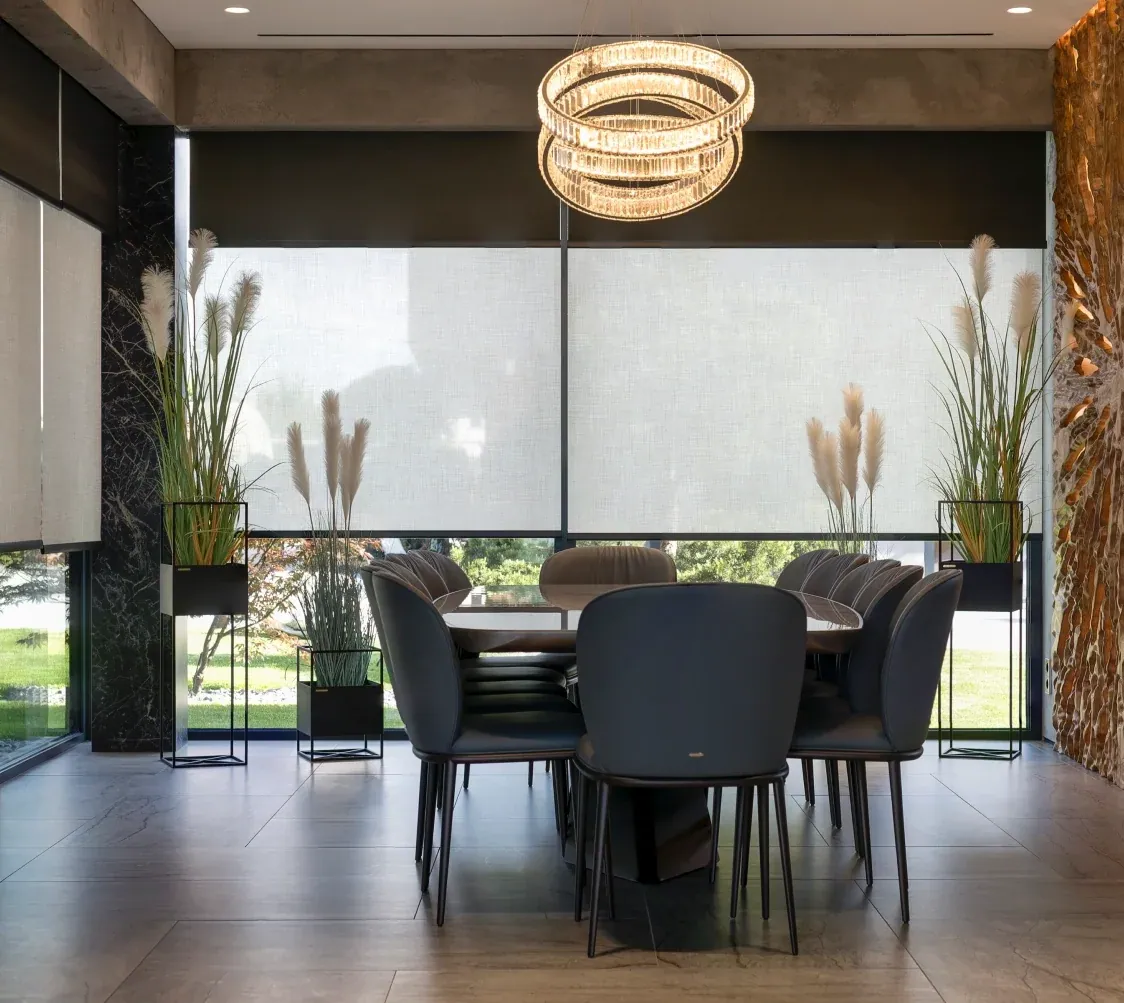
For solar shades Malibu is the hardest test on this coast. The house is there for the ocean, and the ocean is where the trouble comes from: glare off the water for most of the day, salt in the air, damp in the mornings and people walking along the sand below. A shade must temper all of that and still leave the horizon where it was. Here is how we choose the fabric, the hardware and the layers for Malibu and for its neighbor, Pacific Palisades.
Why are Malibu window treatments so difficult to get right?
Malibu has 21 miles of coastline and very little depth, and for most of its length the coast runs from east to west. The ocean therefore lies to the south. Carbon Beach faces almost due south, and only toward Broad Beach and the western end does the shore turn to the southwest. A room that looks at the water looks into the sun for most of the day, and in winter the low light reaches to the back of it.
The water doubles the difficulty. The sun is thrown back from the sea, so the glare arrives from below the horizon as well as from above it. The houses, moreover, are built to face it. Along Carbon Beach, the Malibu Colony and Broad Beach they stand shoulder to shoulder on the sand, closed to Pacific Coast Highway and open entirely to the ocean.
Which solar shade fabric keeps the horizon in view?
A solar shade is a roller shade in an open weave, and the weave is described by its openness, the share of the cloth that is open space. One, three, five and ten percent are the usual figures. A tighter weave cuts more glare and heat, and a more open one keeps more of the view, as we explain in our entry on motorized shades in Bel Air. At the ocean the choice is finer, because the thing to be kept is a single line where the sea meets the sky.
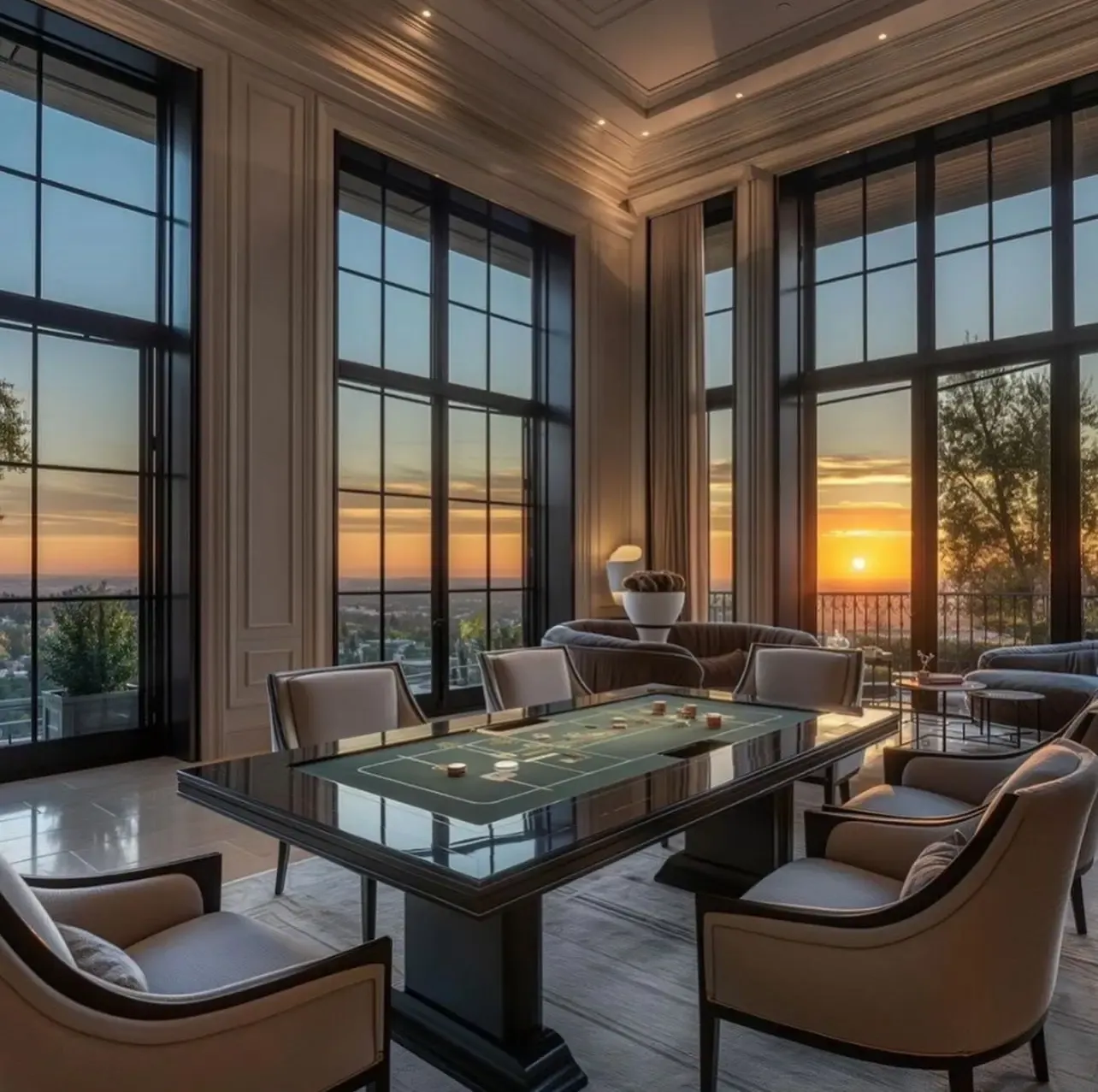
Color settles it as often as openness. A dark fabric absorbs the light that strikes it, so the eye looks past the cloth to the water and the horizon stays crisp. A pale fabric reflects more heat, but it glows in the sun and veils the view. For a room that faces the water we therefore begin with a dark fabric of three to five percent, and we judge the samples against the glass when the sun is on the sea. Because the glare rises from the water as well, a shade lowered halfway seldom answers. It must come down fully and be seen through. The kinds are described under roller and solar shades.
How is a house on the sand kept private?
In California the sand below the mean high tide line is public, so people walk past a beach house for much of the day. By day a solar shade gives a good measure of privacy, since it is far easier to see out through it than in. After dark, with the lamps lit, the effect is reversed. The beach side therefore wants a second layer for the evening: a sheer or a lined drapery on a track in the living rooms, and in the bedrooms a blackout shade on a second roller.
What should window treatments for salt air be made of?
Salt is the quiet enemy at the coast. It comes in on the breeze through every open door, and the damp of the marine layer keeps it at work. Ordinary steel rusts, and brackets, screws and chains made of it are the first parts to fail. Stainless steel of the marine grade, which is alloyed with molybdenum to resist salt, and aluminum with an anodized or powder coated finish stand up far better. For houses at the coast we specify hardware in materials and finishes chosen to resist corrosion.
The cloth of a solar shade is well suited to the place. It is woven from yarns of polyester or fiberglass coated in vinyl, so it takes up almost no moisture, resists mildew and holds its shape in damp air. A little care does the rest.
- Wipe the fabric and the metal parts with a soft damp cloth now and then, so that salt does not lie upon them.
- Raise the shades before the doors are opened wide in a wind, since a lowered shade will swing and strain.
- Keep silk, viscose and unlined natural fibers for sheltered rooms, away from the open doors.
Which fabrics suit beach house window treatments?
Drapery has its place beside the sea, provided the fiber is chosen for it. We advise solution dyed acrylic, polyester and linen blends, which hold their color in strong light and resist mildew. The reasons are given in our guide to performance drapery fabrics. Sheers in a soft ripple fold stack back clear of sliding doors, and on a terrace or a loggia outdoor drapery gives shade and shelter from the wind.
Why do motorized shades in Malibu repay early planning?
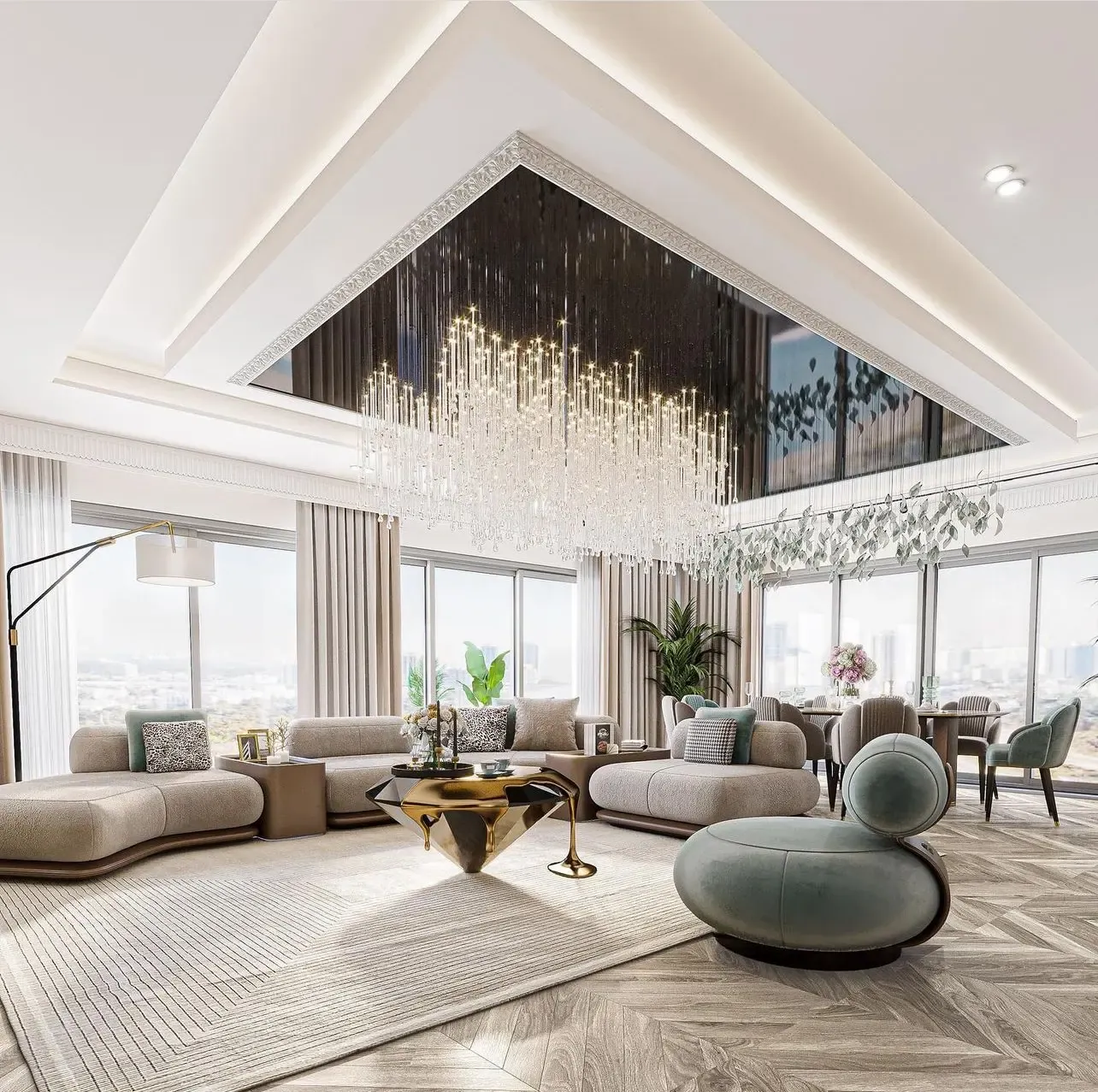
Glass on this scale is best motorized. The shades can be set to lower as the sun comes round to the water and to rise when it has gone. In a new house the rollers disappear into pockets in the ceiling, and power is brought to each window before the walls are closed.
In the eastern part of the city, at Big Rock, Las Flores and La Costa, many houses were lost in the fire of January 2025 and are being rebuilt. That is the moment to settle these things, and we gladly work with the architect and the builder from the first drawings. More is said under motorized window treatments.
Do the same rules hold for solar shades in Pacific Palisades?
Very largely. From Castellammare above the highway to the Huntington upon its bluff, the houses of Pacific Palisades look across the same bay toward the same sun. They stand higher above the water, so the salt is lighter, though not absent, and the glare off the sea is as strong. Many families there are rebuilding too, and the same advice applies: decide the shades early.
If you are planning custom shades for a house at the coast, we should be glad to judge the fabrics with you against the glass, in your own light. Diana Mendez, who leads the firm and is a textile expert, advises on the fabrics. Please request a consultation and she or one of her designers will be in touch to arrange it.
Questions and answers
What openness is best in solar shades for ocean views?
For a room facing the water we generally begin with a dark fabric of three to five percent openness. The dark color keeps the horizon crisp, and the weave cuts the glare off the sea.
Does salt air damage shades and their hardware?
It can. Salt corrodes ordinary steel, while marine grade stainless steel and coated aluminum stand up far better. We specify hardware in materials and finishes chosen to resist corrosion, with solar shade fabric that takes up almost no moisture.
Do solar shades give privacy from the beach at night?
Not by themselves. By day it is easier to see out than in, but after dark the lit room is on view. For the evening we add a sheer, a lined drapery or a blackout shade on a second roller.
Can motorized shades be planned into a house that is being rebuilt?
Yes, and it is the best time to do it. Pockets can be framed into the ceilings and power brought to every window before the walls are closed, so that the shades vanish when they are raised.
Would you like advice on your own windows?
Request a Quote →