Performance Drapery Fabrics: How the Synthetics Stand Up to the Sun
Performance drapery fabrics for Los Angeles homes: how polyester, acrylic, olefin, nylon, viscose and acetate stand up to sun, sea air and wear.
Yesterday we considered wool, linen, cotton and silk, the four natural fibers from which the finest drapery has always been made. Today we turn to the other half of the swatch case. Performance drapery fabrics are woven from synthetic fibers, or from blends of synthetic and natural ones, and they are engineered to resist the fading, the damp and the daily wear that will defeat a silk or a cotton at a sunny Los Angeles window. They were once regarded as something of a poor relation. That view is now thoroughly out of date, and for a good many rooms in this city a well chosen synthetic is simply the right answer.
What are performance drapery fabrics?
The term covers any cloth chosen for how it behaves rather than for its pedigree. In practice it means two families. The true synthetics are made from polymers: polyester, acrylic, olefin and nylon. The semi synthetics, viscose and acetate, are regenerated from wood pulp, which makes them cousins of cotton and linen in chemistry and, as we shall see, in temperament. It is a mistake to treat these six as one. They differ from one another quite as much as wool differs from silk.
One term is worth knowing before any other: solution dyed. In ordinary dyeing the color is applied to the finished yarn or cloth and sits at or near the surface of the fiber, rather as the red sits on a radish. In solution dyeing the pigment is mixed into the liquid polymer before the fiber is formed, so the color runs all the way through, as it does in a carrot. Sunlight has a great deal more work to do before such a fabric looks tired, which is why solution dyed cloth is the standard for awnings, boat covers and garden furniture, and why we look for it when a window takes hours of direct sun.
Polyester drapery: the steady all rounder
Polyester is the most widely used drapery fiber in the world, and it has earned the position honestly. Sunlight weakens it only very gradually. It absorbs almost no moisture, so a polyester panel does not lengthen and shorten with the weather as linen does. Mildew has little interest in it, it holds a pleat faithfully and it asks for very little care. This is why so many of the best sheers are polyester: a sheer hangs unlined against the glass and takes the full force of the day, and it wants a fiber with stamina.
The modern weaving mills have also become remarkably good at disguise. There are polyesters with the dry slub of linen, the bloom of wool and the luster of silk, and at arm's length a visitor would be hard pressed to tell. The fiber has its faults, of course. It can hold a static charge and gather dust, an oily mark is harder to shift than a watery one, and under the hand it does not have quite the life of the real thing. For custom drapery in a room where the sun is strong and the household is busy, those are modest prices to pay.
Solution dyed acrylic drapery: the best fabric for strong sun
Acrylic has a soft, warm hand that is closer to wool than to anything else, and when it is solution dyed it is among the most fade resistant drapery fabrics one can buy. It loses very little strength in sunlight, it sheds moisture, and mildew does not trouble the fiber itself. It began its career out of doors, and the finer weights now woven for interiors carry that constitution with them.
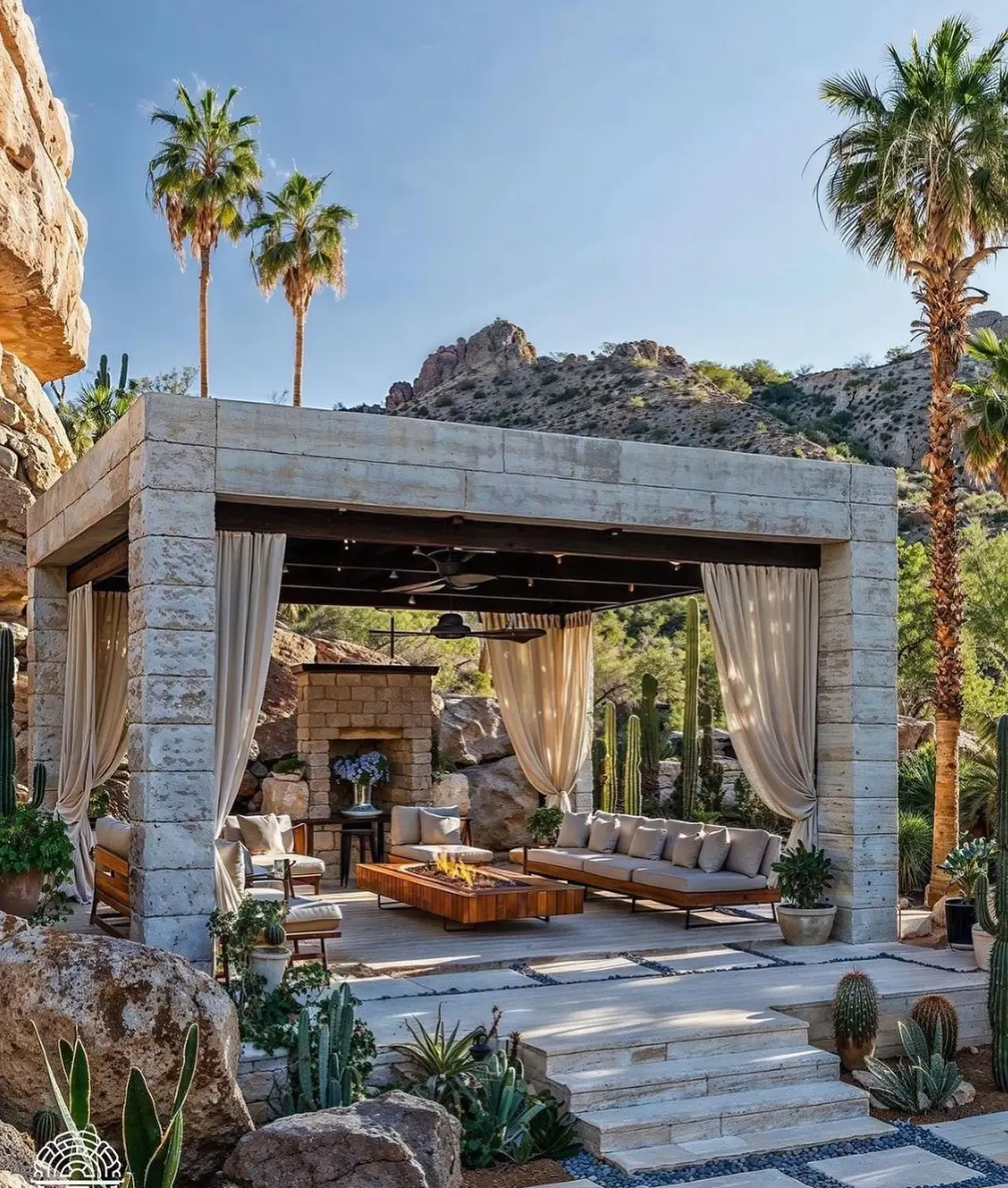
It is our first choice for outdoor drapery at a loggia, a pool pavilion or a covered terrace, where the panels live with sun, sprinklers and the evening damp. Indoors, we turn to it for west facing rooms at the coast, in Malibu and Santa Monica, where the afternoon light comes off the water with nothing to soften it.
Olefin and nylon: one useful, one best kept from the window
Olefin, which is also called polypropylene, absorbs almost no water at all. It resists watery stains and mildew, it is solution dyed as a matter of course, and it is comparatively inexpensive. Its hand is a little coarser than acrylic, it dislikes a hot iron, and it has a curious appetite for oily marks. We find it useful in family rooms, breakfast rooms and sheltered terraces. Under the most relentless sun, acrylic is the better investment.
Nylon is immensely strong and resists abrasion better than almost any other fiber, which is why it is prized in carpets and upholstery. Sunlight, however, is its weakness. Long exposure yellows it and saps its strength, and in that respect it has more in common with silk than with polyester. A small proportion of nylon in a blend, added for toughness, does no harm. As the principal fiber of a drape at a sunny window, we do not advise it.
Viscose and acetate: a beautiful drape and a delicate constitution
Viscose, known in America as rayon, has a fluid, heavy drape and a soft sheen that come very close to silk at a fraction of the cost, and it takes dye in deep, saturated colors. Its weaknesses are those of its vegetable origin, somewhat magnified. It is highly absorbent, so a long panel can drop in damp weather and draw up again in dry. It is weaker wet than dry, and it does not resist sunlight well. Acetate, the fiber of many taffetas and satins, has a crisp rustle and a fine luster, and shares the same dislike of sun and water.
Neither is a poor fabric. They are simply fabrics for the right room: a formal dining room or a principal bedroom in Beverly Hills, set back from the sea air, where the drapery is lined and interlined and the glass does not face the afternoon sun. We would not hang either unlined at the beach.
Linen blend drapery: the look of linen with better manners
Most of what we specify is neither purely natural nor purely synthetic. A blend takes the appearance of one fiber and the stability of another. Linen woven with polyester keeps the dry, luminous look that clients love and creases far less, moves far less with the weather and bears the sun more patiently. Viscose blended with polyester holds its length where pure viscose would wander. When a client near the coast has set her heart on linen, a linen blend is very often the fabric that Diana Mendez puts into her hand.
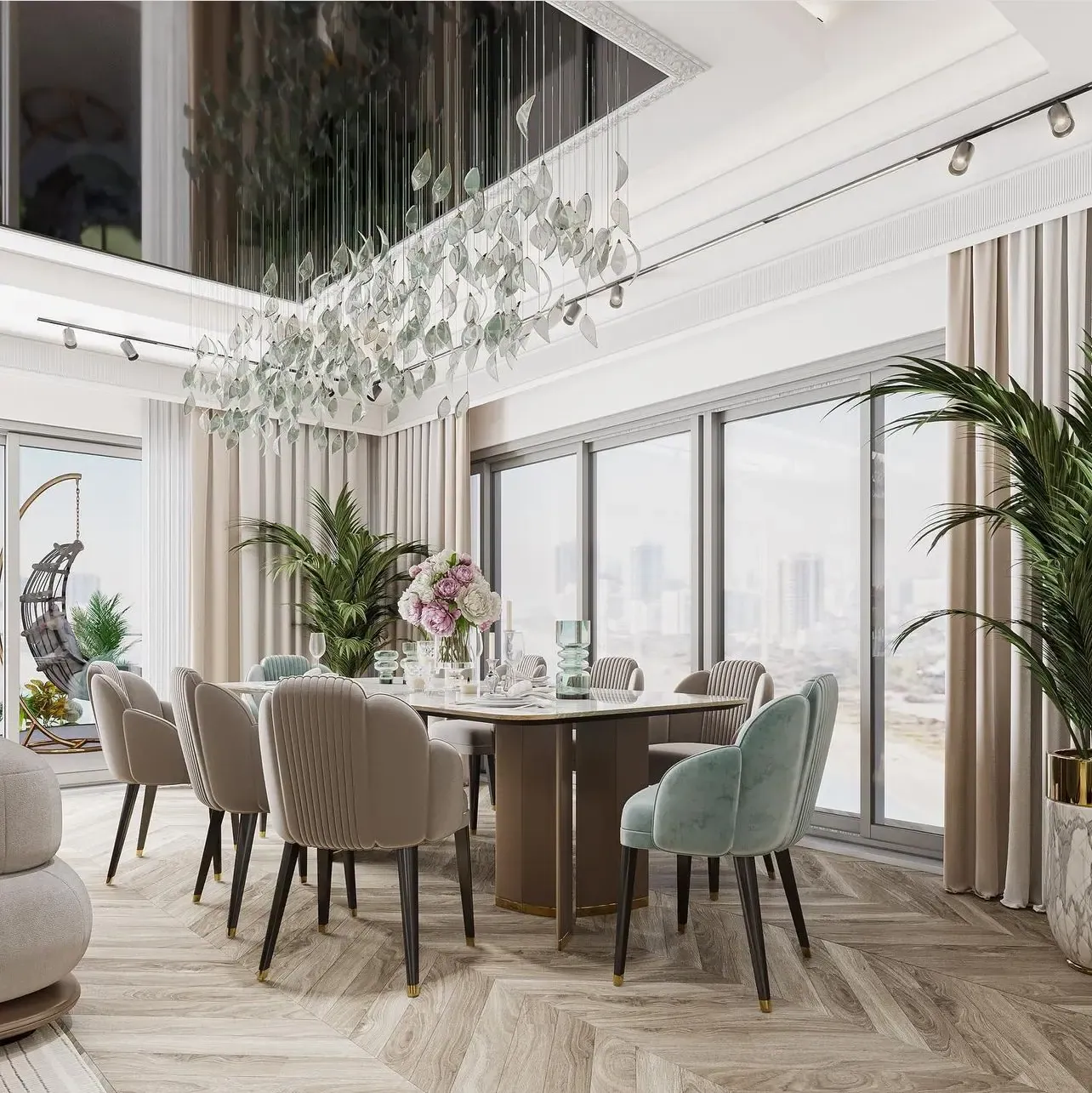
Which synthetic drapery fabrics belong where in Los Angeles?
- At the coast, where salt and the marine layer are daily facts: solution dyed acrylic, polyester and linen blends. Unlined viscose and acetate are best avoided.
- In the hills, where a west facing room may take the sun for hours: polyester sheers and solution dyed cloths, ideally with custom shades beneath them to take the first of the glare.
- In family rooms, kitchens and playrooms: olefin and polyester blends that can be cleaned without ceremony.
- In loggias, cabanas and pool pavilions: solution dyed acrylic, made up with hardware that will not rust.
- In formal rooms out of direct sun: viscose, acetate and their blends, fully lined, for a silken effect at a sensible cost.
- In restaurants, hotels and offices across Los Angeles: flame resistant polyester, since commercial interiors commonly require it.
Does a performance fabric make lining unnecessary?
It does not. Even the most fade resistant drapery fabric will change in time, because visible light and heat do their share of the damage alongside the ultraviolet. A lining still protects the face cloth, gives the folds their body and improves the comfort of the room, and we have written at length about lining, interlining and fullness for those who wish to know more.
There is one further defense, and it is applied not to the fabric but to the glass. Our next entry considers the clear window film that stops nearly all of the ultraviolet light before it reaches the room. In the meantime, if you would like to see and handle these fabrics beside the natural fibers, we should be delighted to bring the swatch case to you. Please request a consultation and Diana Mendez or one of her designers will be in touch to arrange it.
Questions and answers
What is the most fade resistant fabric for drapery?
Solution dyed acrylic is generally the most fade resistant drapery fabric, followed by solution dyed polyester and olefin. The pigment runs through the whole fiber instead of sitting on its surface, so the color holds for far longer in strong sun. Lining and shades extend its life further.
Is polyester drapery a poor substitute for linen or silk?
Not any longer. Modern polyester can be woven to resemble linen, wool or silk very closely, and it is steadier than any of them in sun and damp. It lacks a little of their life under the hand, which is why a blend of natural and synthetic fiber is so often the best answer.
Which drapery fabrics are best near the ocean?
For homes in Malibu, Santa Monica and the other coastal communities we generally advise solution dyed acrylic, polyester or a linen and polyester blend. These absorb very little moisture, so they keep their length and resist mildew. Pure viscose, acetate and unlined silk are poorly suited to sea air.
Can performance fabrics be used for outdoor drapery?
Yes, and out of doors they are essential. Solution dyed acrylic is our usual choice for outdoor drapery at a terrace, loggia or pool pavilion, because it holds its color in full sun and dries quickly after rain or sprinklers. The rods, rings and fixings should be rust resistant as well.
Do synthetic drapery fabrics still need a lining?
In most cases, yes. A lining shields the face fabric from light and heat, adds body to the folds, improves privacy and helps to keep a room comfortable. Sheers are the exception, since they are meant to hang unlined, which is exactly why a stable fiber such as polyester suits them so well.
Would you like advice on your own windows?
Request a Quote →