Motorized Shades in Bel Air: Glass Walls, Views and Wiring
Motorized shades Bel Air guide: how to shade walls of glass and keep the canyon view, with pockets, power and schedules settled before the walls close.
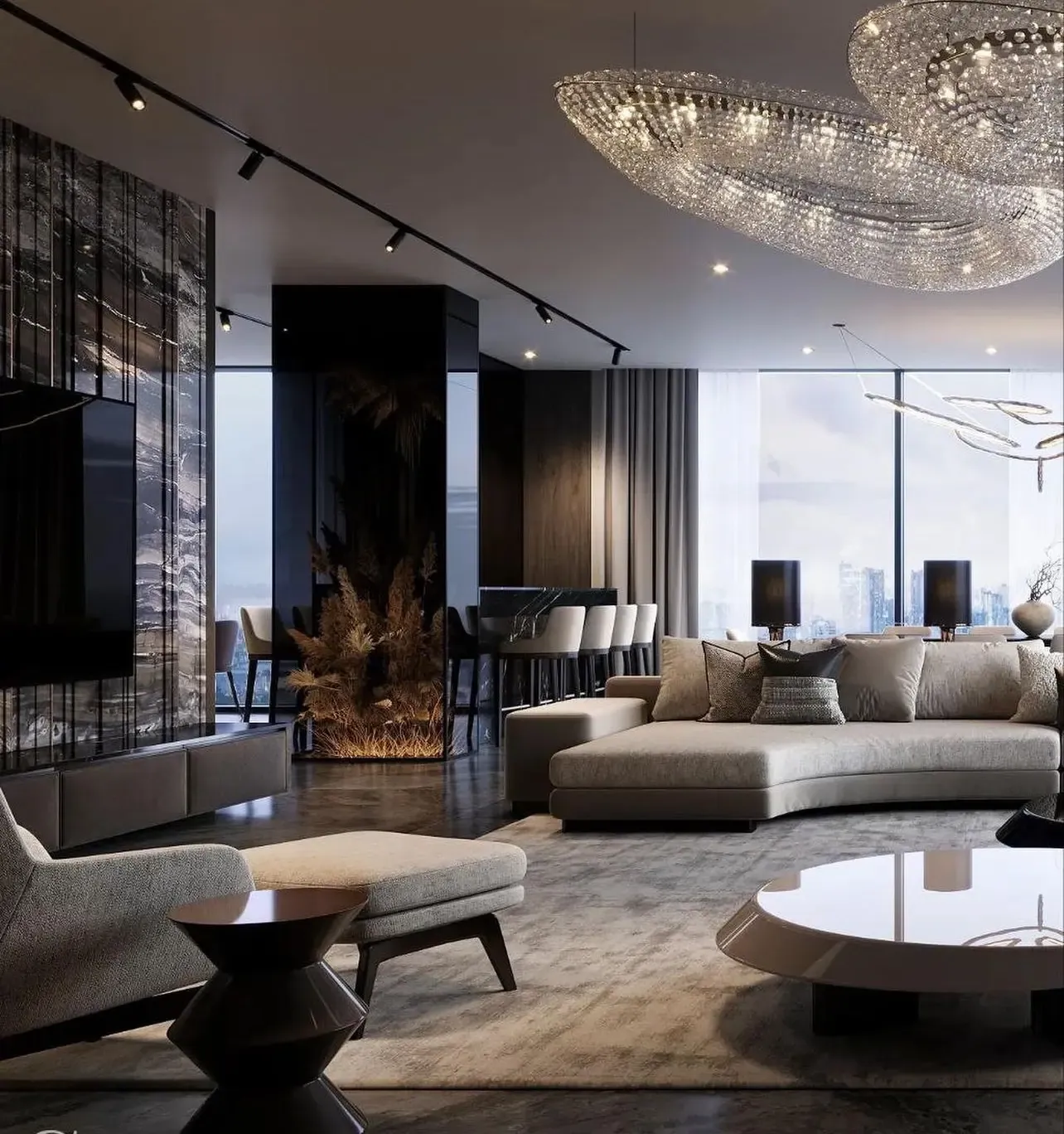
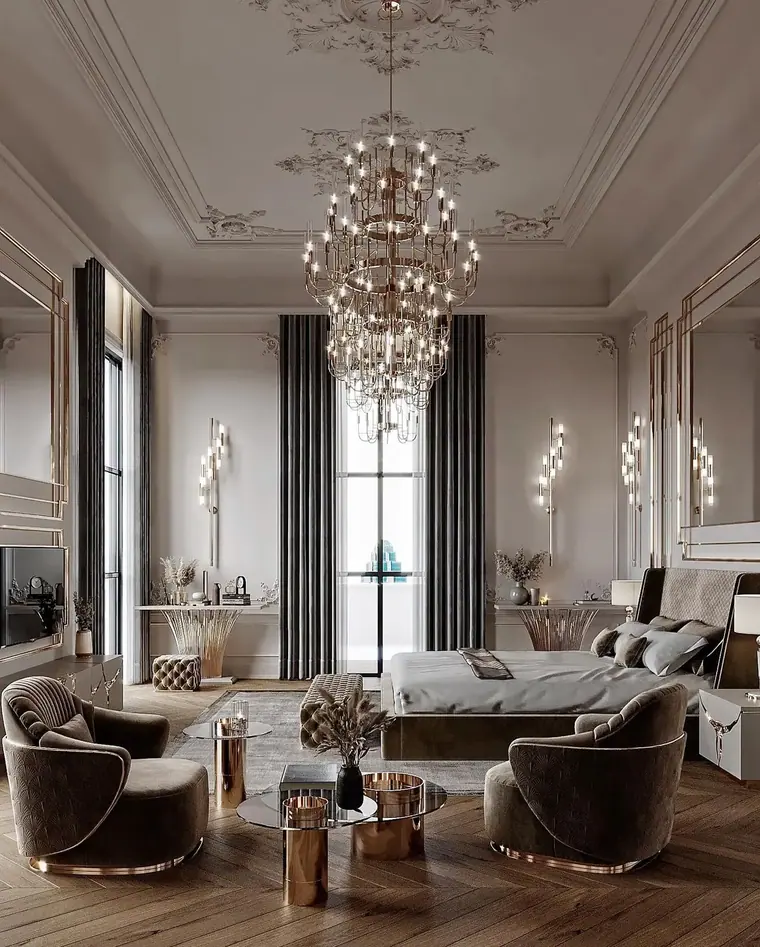
For motorized shades Bel Air is perhaps the most exacting address in Los Angeles. The houses are built for their views, which means long walls of glass turned toward the canyon, the city or the sea, and very often toward the afternoon sun as well. A shade there must protect the room, keep the view, and vanish when it is not wanted. All three are settled long before any fabric is chosen, by what is built into the ceiling and what is run through the walls. We set out the general principles in what to decide before the walls are closed. This entry applies them to Bel Air and to its neighbor, Holmby Hills.
Why do the houses of Bel Air ask so much of a shade?
Bel Air was founded in 1923 by Alphonzo Bell, and it climbs the Santa Monica Mountains from Sunset Boulevard to Mulholland Drive. It is not all of a piece. Behind the East Gate lie the estates of the 1920s and 1930s, on Bellagio Road, Copa de Oro Road and Nimes Road, Mediterranean, Georgian and Tudor in manner. Higher up, along Stradella Road, Chalon Road and Roscomare Road, the houses are largely postwar and a good many are new, set upon the ridges for the sake of the outlook.
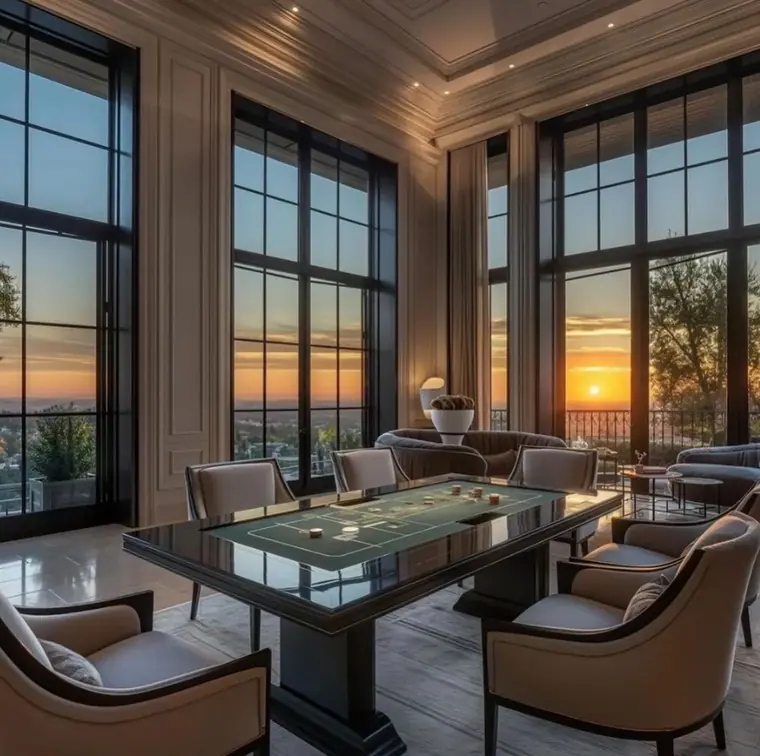
It is these upper houses that test a shade. Glass runs from floor to ceiling and from wall to wall, and in the tall rooms it rises well out of reach. A house that looks out across the basin generally looks south or west, so the finest prospect and the hardest sun arrive through the same window. And a house in a canyon is overlooked from the slope opposite, which makes privacy a question even where there is no street.
How do motorized solar shades keep the canyon view?
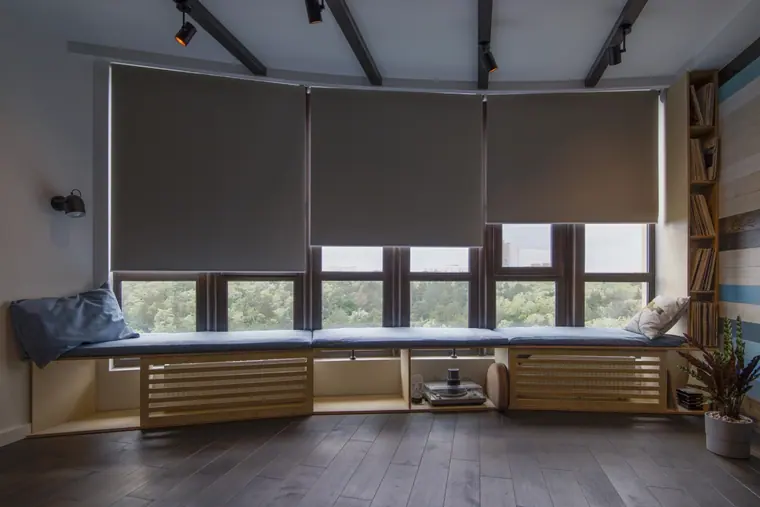
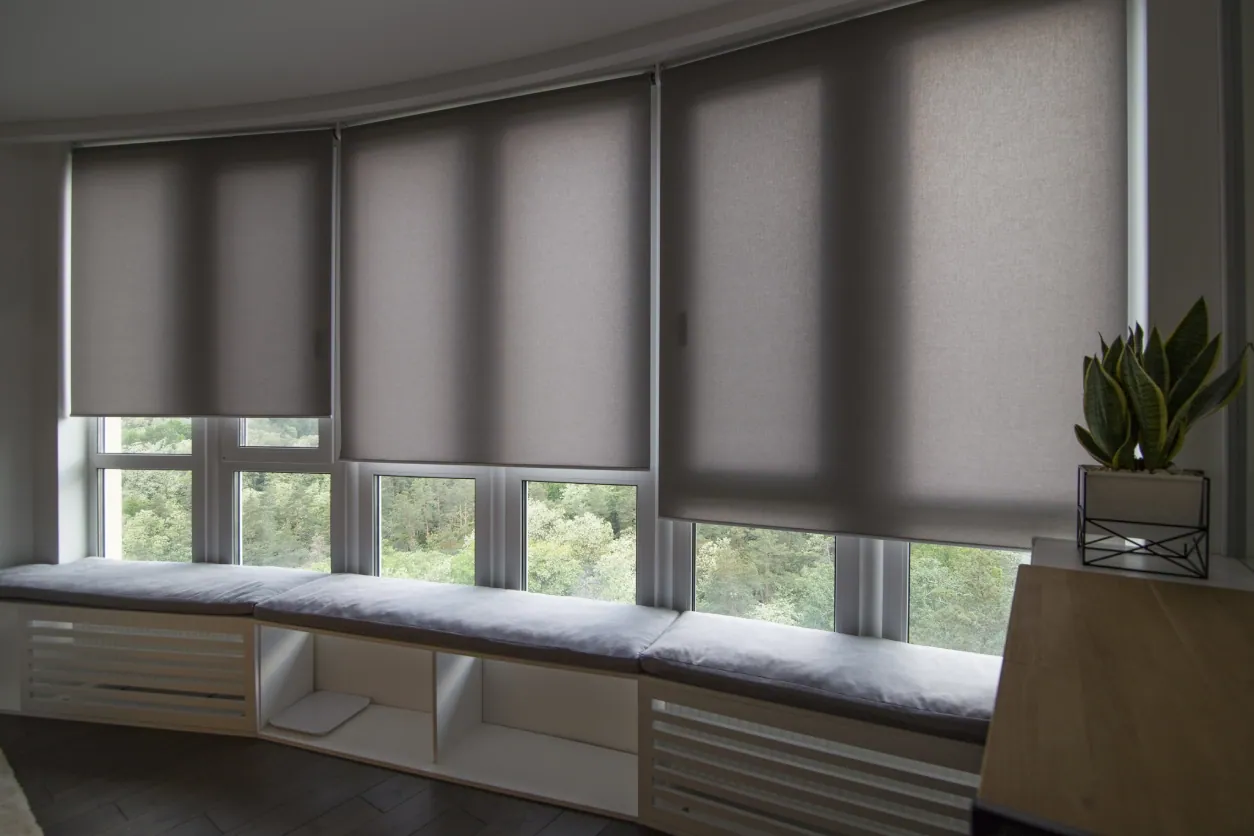
The first layer at a view window is nearly always a solar shade, a roller shade in an open weave that filters the sun without closing the room. The weave is described by its openness, the share of the cloth that is open space. Fabrics of one, three and five percent are the usual choices. The lower figures cut more glare and heat, and the higher keeps a sharper view. Color matters quite as much. A dark fabric gives a clearer view through the shade, and a pale one reflects more heat. A dark fabric of about three percent is a common starting point for a western wall above the city, though we prefer to judge samples against the glass itself, at the hour when the sun is upon it.
By day such a shade also gives privacy, since it is far easier to see out through it than in. After dark, with the lamps lit, the effect is reversed and the room is on view. That is the reason for a second layer: a sheer or drapery in the living rooms, and in the bedrooms a blackout shade on a second roller. The several kinds are set out under roller and solar shades.
Why must shade pockets be planned before the ceiling is built?
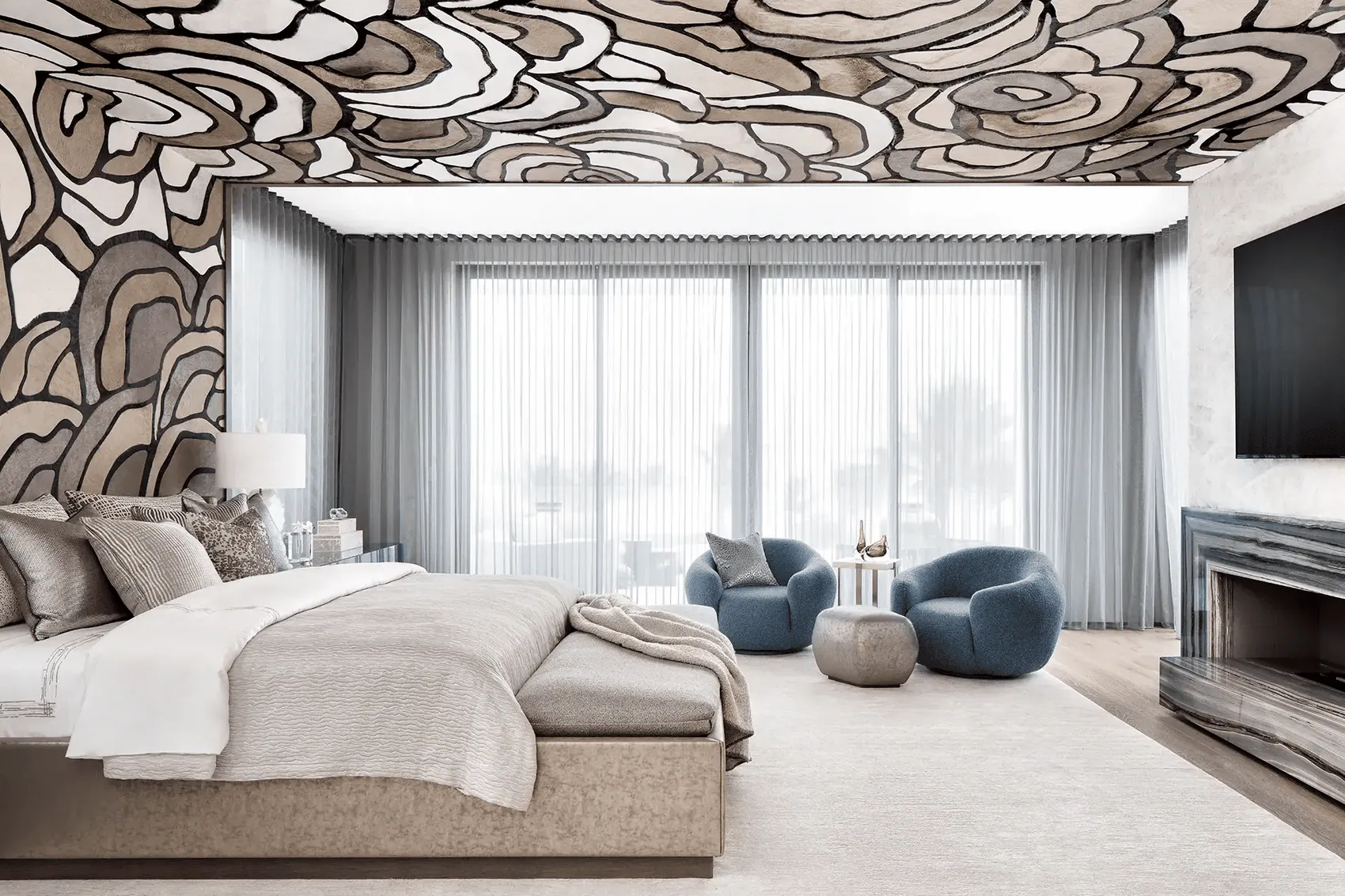
A shade that is to vanish needs somewhere to go. In a new house that is a pocket, a slot recessed into the ceiling at the head of the glass, into which the roller and its motor disappear. When the shade is raised there is nothing to be seen but a narrow line in the ceiling.
Shade pockets are a matter of framing, and so they are settled early. A long drop makes a thicker roll, and two shades on two rollers want more room than one, so the shade must be chosen before the pocket is drawn. A wall of glass wider than a single shade can span is divided into several, with the joints set to fall upon the frames of the glass, where they pass unnoticed. Where drapery is to hang in front, its motorized track wants a recess of its own.
What does wiring a house properly involve?
Hardwired motorized shades are the right choice for glass on this scale. A large shade is heavy, it is moved every day, and nobody wishes to recharge a battery at the top of a double height window. The power may be low voltage, carried by a slender cable from a central supply, or ordinary line power brought to the window by the electrician. Either way the wire must arrive at the motor end of each pocket before the walls and ceilings are closed.
- Decide the shades first: one layer or two, and how each wall of glass is to be divided, since every motor needs its own feed.
- Mark every window on the drawings, with its pocket, its motor end and the route of its cable.
- Settle where the keypads are to go, so that their wiring is run with the rest.
- Wire the windows that may be wanted later. A cable costs little while the walls are open.
We are glad to settle these details with your architect, builder and electrician. If the house is already finished, all is not lost. Rechargeable battery motors need no wiring and serve well at windows of moderate size, and larger shades can often be reached with discreet wiring. The whole subject is treated under motorized window treatments.
How should automated shades be scheduled through the day?
The protection that works is the kind that happens without anyone remembering it. Automated shades can be set to lower shortly before the sun reaches a wall of glass and to rise when it has passed, and the better controls follow sunrise and sunset as they shift through the year. Scenes move a whole room or a whole floor together from one button on a keypad.
For motorized shades in Holmby Hills the emphasis is a little different. The estates along Carolwood Drive and Mapleton Drive are formal houses, and their rooms commonly hold paintings, antique rugs and silk. There the shade is concealed behind the drapery, so that the sun can be managed through the day without the drapery being drawn, and the schedule is set chiefly to protect what is in the room. We wrote of the damage itself in protecting art, floors and furniture.
Whether the house is still on the drawing board or long since finished, we should be glad to look at the glass with you. Diana Mendez, who leads the firm, advises on the fabrics, and our own installers fit every shade. Please request a consultation and she or one of her designers will be in touch to arrange it.
Questions and answers
Can motorized shades be added to a finished house in Bel Air without opening the walls?
Usually, yes. Rechargeable battery motors need no wiring at the window, so shades of moderate size can be motorized with very little disturbance. Very large shades are better hardwired, and we advise window by window on what is possible.
What is a shade pocket, and when must it be planned?
A shade pocket is a recess built into the ceiling above the glass, into which the roller and its motor disappear when the shade is raised. It must be framed during construction, so its size is agreed before the ceilings are built.
Which solar shade fabric keeps the view best?
A dark fabric in a more open weave gives the clearest view, and a tighter weave gives more protection from glare and heat. Fabrics of about three to five percent openness are common at view windows. We judge samples against the glass itself.
Can motorized window shades lower by themselves in the afternoon?
Yes. Motorized window shades can follow a schedule, lowering before the sun reaches the glass and rising when it has passed, whether or not anyone is at home. They can also be moved together as scenes from a keypad, a remote or an app.
Would you like advice on your own windows?
Request a Quote →