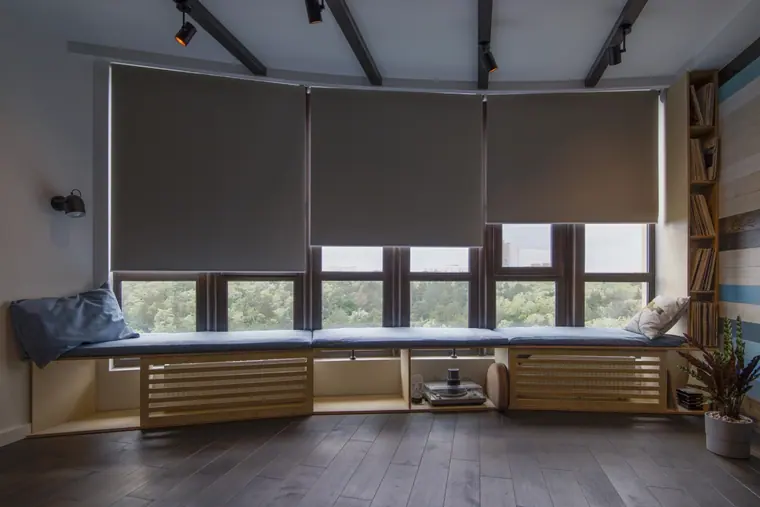
Wool, Linen, Cotton and Silk: Natural Fiber Drapery in Los Angeles
A guide to natural fiber drapery for Beverly Hills and Los Angeles homes: how wool, linen, cotton and silk hang, age and stand up to the California sun.
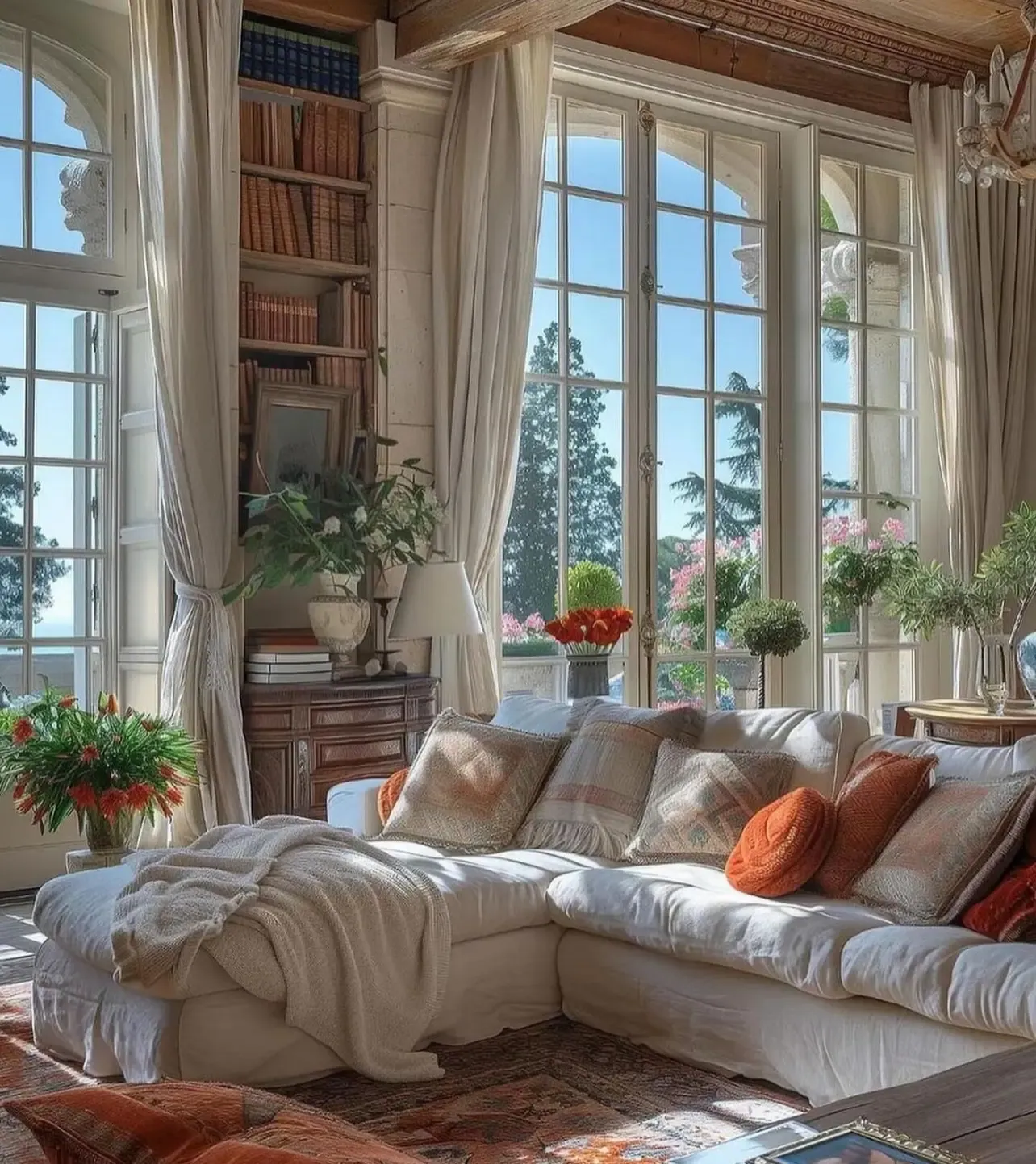
There is a moment in every consultation when the swatches come out of the case and the conversation changes. Color and pattern are what the eye notices first, yet it is the fiber beneath them that decides how a drape will hang, how it will age and how long it will keep its beauty at a sunny Los Angeles window. Natural fiber drapery, cut from wool, linen, cotton or silk, has a depth and a movement that are very difficult to imitate, and each of the four behaves quite differently once it is on the wall. This is the first of three entries on the subject. Here we consider the natural fibers. Next we turn to the synthetics, and then to the question of how to keep the sun from ruining either.
Why the fiber matters more than the pattern
A fabric is a fiber first. Whether it creases or recovers, takes up moisture from the air or ignores it, fades gracefully or gives way all at once: these things are settled long before the cloth is dyed. Los Angeles makes the choice more interesting than most cities, because the climate changes within a few miles. A house in Malibu lives with salt and morning damp. A hillside room in Beverly Hills may take four or five hours of direct western sun. The valleys are hot and dry for months together. The right fiber in one of these settings may be quite the wrong one in another.
Linen drapery: relaxed, luminous and alive
Linen is spun from the stalk of the flax plant, and it is probably the fabric most often asked for in Los Angeles today. It has a dry, matte hand, a slight irregularity in the yarn that catches the light, and a way of falling in soft, unforced folds that suits a Spanish house and a contemporary one equally. It is also among the strongest of the natural fibers, and it bears sunlight rather better than cotton or silk.
Its character comes with two habits worth knowing. Linen has very little elasticity, so it creases. Most of our clients regard this as part of its charm, and those who do not are better served by a blend. It also takes up and releases moisture from the air, which means a long linen panel can lengthen and shorten a little as the weather changes, particularly near the coast. We allow for this in the making, with generous hems and a length that anticipates the movement, and we generally advise a lining to give the cloth body and to shield it from the glass.
Cotton drapery: the versatile one
Cotton is the most accommodating of the four. It takes dye and print beautifully, which is why the great floral chintzes, tickings and toiles are nearly all cotton, and it can be woven as a crisp sateen, a sturdy canvas or a deep velvet. It hangs obediently, tailors well into pleats and is comparatively kind to a budget.
Its weakness is light. Left unlined at a sunny window, cotton will fade and, over the years, lose its strength. Lined properly and kept out of the fiercest exposure it gives long and reliable service, and it is our frequent recommendation for family rooms, bedrooms and children's rooms where a printed or colored fabric is wanted.

Wool drapery: body, warmth and quiet
Wool is the least expected choice in Southern California and one of the most rewarding. The fiber has a natural crimp, so wool cloth springs back from creasing and falls in rounded, even folds that keep their shape for years. It takes color with great depth. It is naturally slow to burn, tending to char and go out where other fibers would carry a flame. And because it is dense and soft at once, wool drapery absorbs sound and tempers the chill of a large window on a winter evening.
Fine worsted wools and wool sateens are lighter than one might suppose and are entirely comfortable in this climate. They suit libraries, studies, dining rooms, bedrooms and home theaters. Wool asks for two courtesies in return: protection from moths, which regular airing and occasional professional cleaning will provide, and a lining, since strong sun will in time yellow and weaken it as it does any natural fiber.
Silk drapery: the most beautiful and the most vulnerable
Nothing has the luster of silk. Taffeta rustles and holds a sculpted fold, dupioni has a lively, slubbed surface, and satin simply pours. In a formal drawing room or a principal bedroom, interlined silk drapery remains the most luxurious thing one can hang at a window.
It is also the fiber least able to bear the sun. Ultraviolet light attacks the protein of which silk is made, and the harm is cumulative and largely unseen until the cloth gives way. Unlined silk in a strong southern or western exposure can begin to split along its folds within a few years. For that reason we do not hang silk without a lining and, in nearly every case, an interlining, and in the brightest rooms we plan a shade or a sheer between the silk and the glass. Our entry on lining, interlining and fullness explains how those hidden layers do their work.
How the four compare at a Los Angeles window
- Drape: silk and wool fall in the most sculptural folds, linen is softer and more relaxed, and cotton is the most easily tailored.
- Creasing: wool recovers best, cotton and silk moderately, and linen least of all.
- Sunlight: linen and wool are the more tolerant, cotton less so, and silk is the most easily harmed. All four should be lined.
- Moisture: linen and cotton move with humidity, so homes near the ocean need careful allowances. Wool manages damp air well. Silk shows water marks.
- Care: all four are best cleaned professionally. Light vacuuming with a soft brush keeps dust from settling into the weave.

Protecting natural fiber drapery from the sun
It is the sun, not wear, that ends the life of most drapery in this part of the world. The remedy is to give the fabric several lines of defense: a good lining, an interlining for the more delicate cloths, sheers or solar shades to take the strongest hours, and motorized schedules that lower them before the sun comes round. We have written about this in protecting art, floors and furniture from the California sun. There is a further measure that many homeowners have not yet met: a clear film applied to the glass itself, which turns back nearly all ultraviolet light without altering the look of the window. It will have an entry of its own in the coming days.
Every window is different, and the surest way to choose is to see the fabrics in your own rooms and in your own light. Diana Mendez, our president and textile expert, will go through fiber, lining and construction with you for each exposure. To arrange a consultation for custom drapery in Beverly Hills or anywhere in Greater Los Angeles, please request a quote.
Questions and answers
Which natural fiber is best for drapery in a sunny room?
Linen and wool tolerate sunlight better than cotton or silk, but no natural fiber should face strong sun unprotected. For a southern or western exposure we usually advise a lined linen or a linen blend, with a sheer or a solar shade to take the hardest hours of the day. Silk is best kept for rooms with gentler light, or hung behind a shade.
Does linen drapery wrinkle and change length?
A little of both. Linen creases because the fiber has almost no stretch, and it lengthens and shortens slightly as the humidity rises and falls, most noticeably near the coast. A lining, a generous hem and a length chosen with that movement in mind keep the panels looking composed. If you prefer a smoother, steadier cloth, a linen blend is the answer.
Is silk drapery a sensible choice in Los Angeles?
It can be, provided it is lined and interlined and is not left to face direct sun for hours each day. In a bright room we place a shade or a sheer between the silk and the glass. Without that protection, silk at a sunny window may begin to split within a few years, which is a sad end for so fine a fabric.
Is wool too warm for drapery in Southern California?
Not at all. Fine wools are light and hang beautifully, and drapery does not warm a room in the way a blanket warms a bed. What wool does is soften sound, resist creasing and take the edge off a cold pane of glass in winter, all of which are welcome in a large room.
How long should natural fiber drapery last?
That depends chiefly on the sun. Unprotected silk at a bright window may fail within a few years. Drapery that is well made, properly lined and kept from the fiercest light, with sheers, shades or film on the glass doing their share, can reasonably be expected to give well over a decade of service.
Would you like advice on your own windows?
Request a Quote →