Custom Drapery in Beverly Hills: From the Flats to the Hills
Custom drapery Beverly Hills guide: what suits the Flats, Trousdale Estates and the tall rooms north of Sunset, and what to ask before you order.
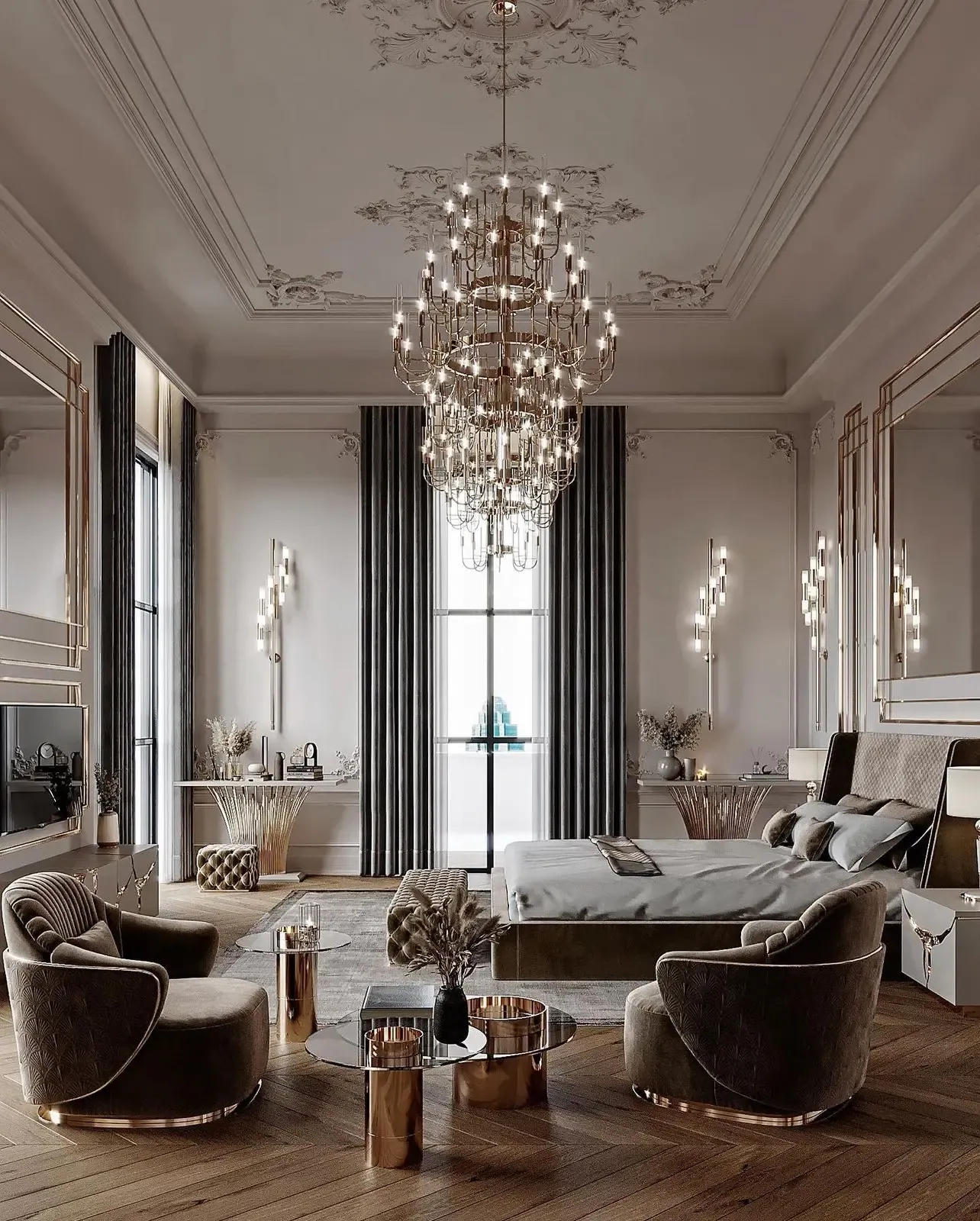
In the matter of custom drapery Beverly Hills is not one place but three. There are the formal houses of the Flats, built for the most part in the 1920s and 1930s. There are the low glass houses of Trousdale Estates, built a generation later. And there are the canyons and the estates north of Sunset Boulevard, which run on westward into Holmby Hills. Each asks something different of a curtain, and what is right in one will look quite wrong in another. This is a guide to all three, with a note toward the end on what to ask for wherever in Beverly Hills the house may stand.
What does a house in the Flats ask of its drapery?
The Flats are the level streets between Santa Monica Boulevard and Sunset Boulevard, and a great many of their houses date from the two decades after 1920. They are Spanish Colonial Revival, Tudor, Georgian and French in manner, with a later layer of Hollywood Regency, and they were planned around formal rooms. There is a living room, a dining room and very often a library, each with windows of a decided shape and a stretch of wall on either side.
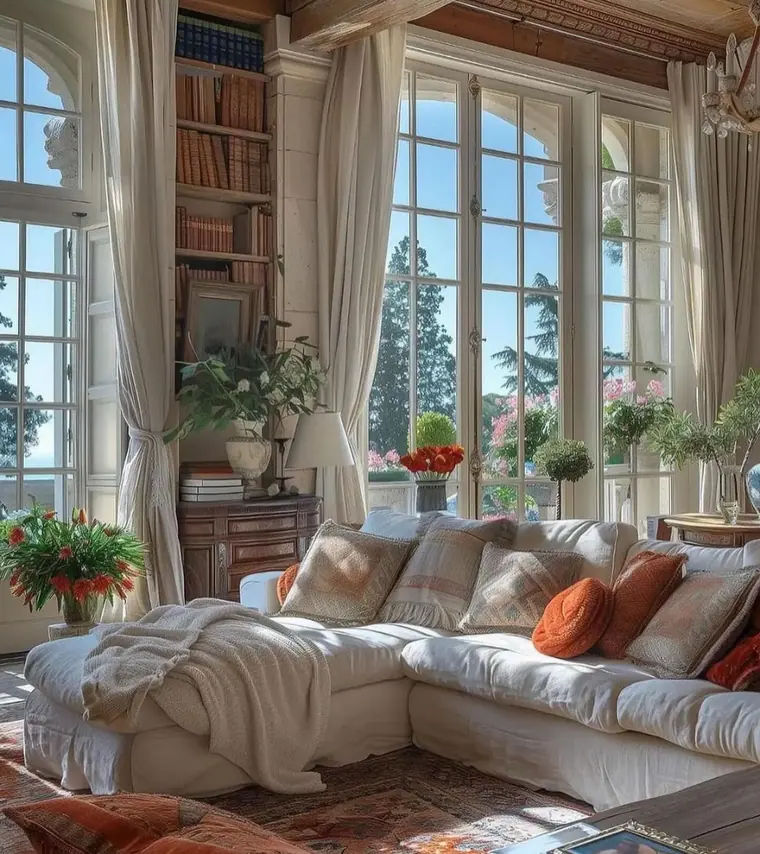
Rooms of this kind want drapery with presence. That means pinch pleat drapery or another tailored heading, generous fullness, and a lining and interlining to give the cloth body and to keep the sun from its face. It means a rod of proper weight, hung well above the window and carried wide of it, so that the room appears taller and the glass is left clear when the drapery is open. Iron suits the Spanish house, and wood or brass the Georgian one. The arched windows of the Spanish houses are best dressed from a rod set above the arch, so that the shape is revealed whenever the drapery is drawn back.
The Flats are also walked and driven past all day. A sheer hung beneath the drapery keeps a street facing room private in daylight without closing it up, and the lined drapery takes over in the evening.
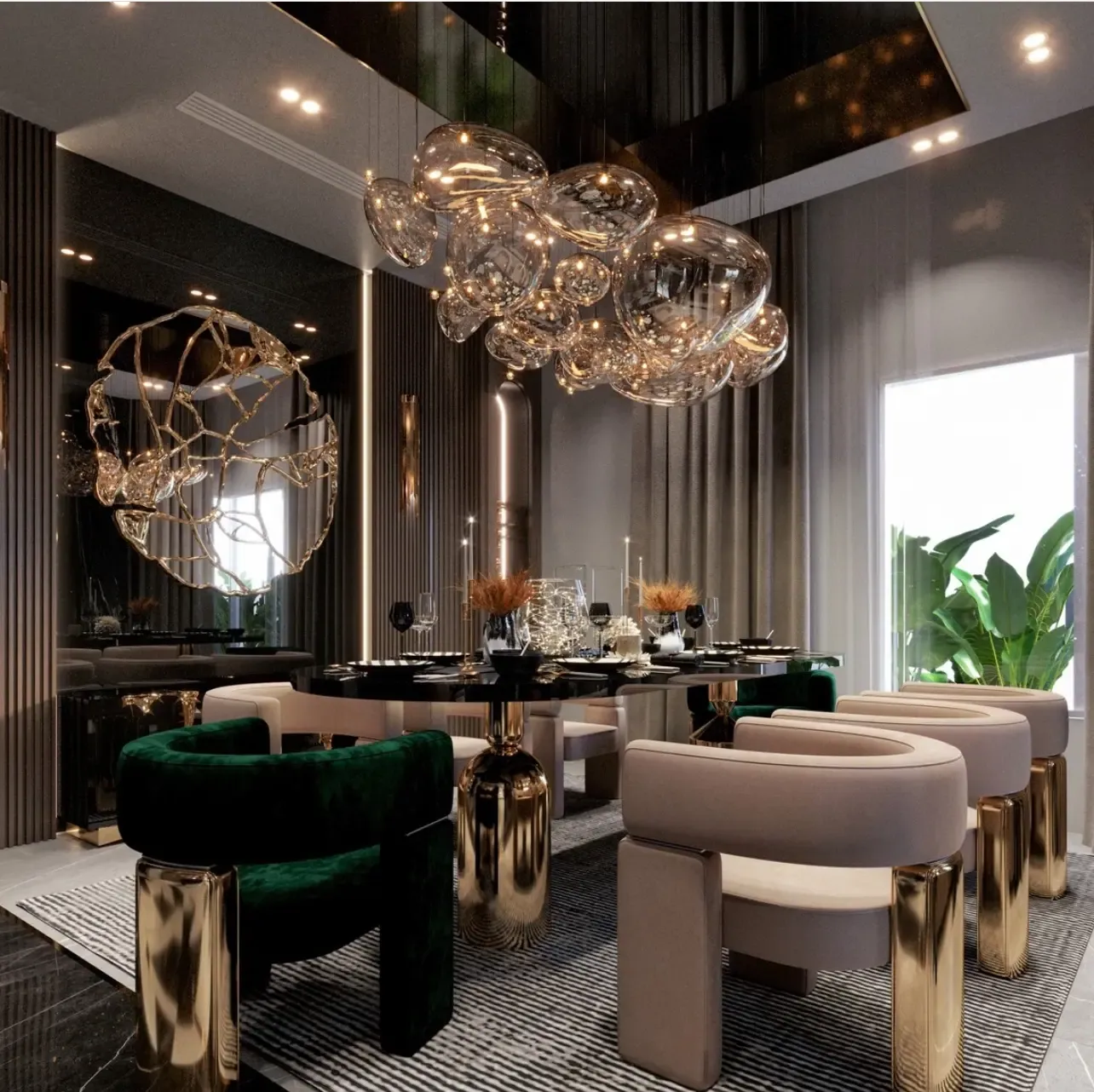
Which drapery suits the glass houses of Trousdale Estates?
Trousdale Estates lies on the slopes above the northeastern corner of the city. It was laid out in the 1950s and built up largely over the two decades that followed, with houses by many of the best architects of the period. The city limits the height of building there to fourteen feet, so the houses are low and wide, of a single story for the most part, with walls of glass turned toward the view across the basin.
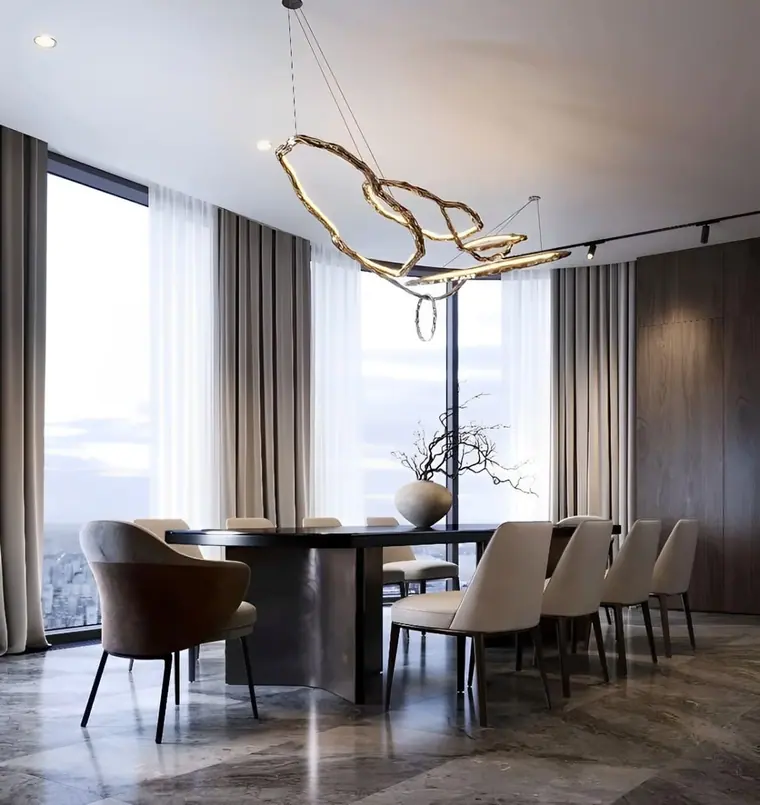
Here the heavy pleated curtain is out of place. The glass runs from floor to ceiling and often from one wall to the other, and the drapery must do the same without interrupting it. Ripple fold drapery on a track recessed into the ceiling is the usual answer. It falls in soft and even waves, stacks back into very little space, and leaves nothing to be seen at the head. Sheers serve by day and a lined panel serves at night. Since such a wall may run the whole width of the room, motorized drapery is less an indulgence than a plain convenience, and the wiring for it is best settled early.
Sun is the other consideration. A wall of glass that enjoys the view generally enjoys the afternoon sun as well, and unlined sheers hang in it all day. We set out yesterday what a clear film upon the glass can and cannot do, and in houses of this kind it is very often worth having, together with a solar shade concealed in the ceiling.
What of drapery for tall windows north of Sunset and in Holmby Hills?
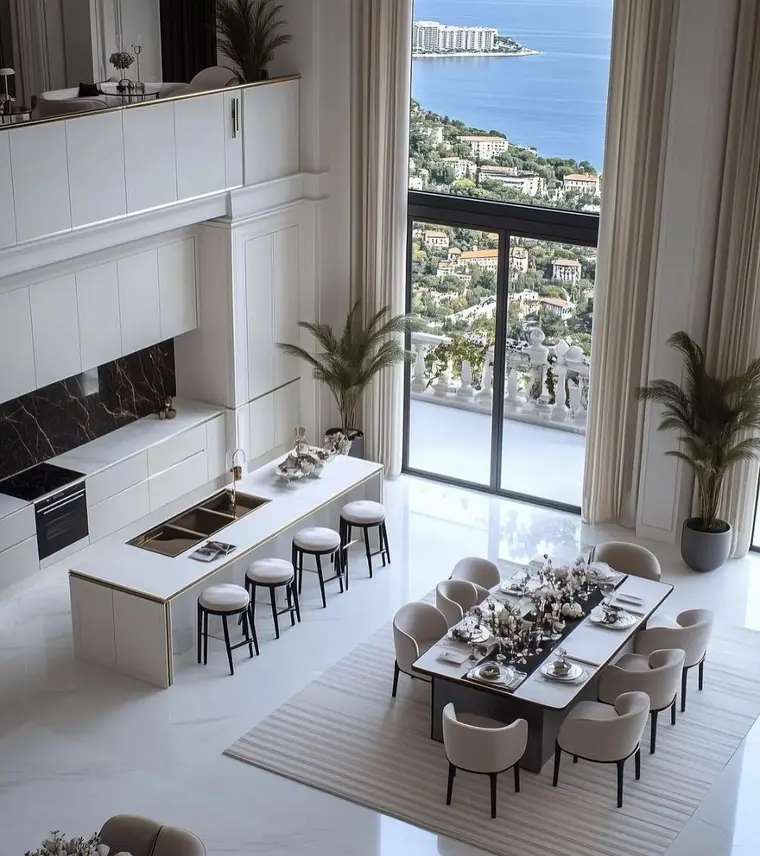
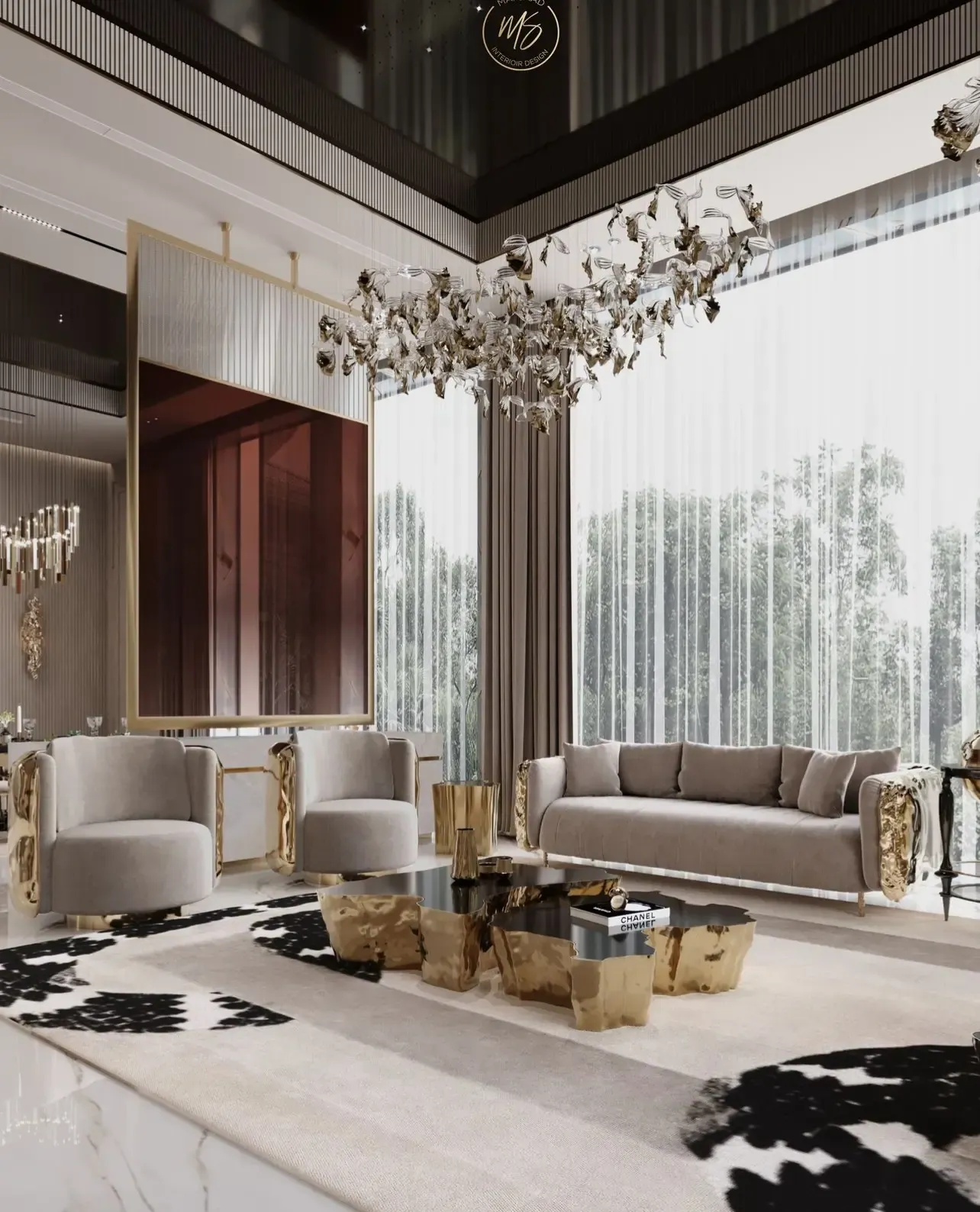
North of Sunset Boulevard the ground rises into Benedict Canyon and Coldwater Canyon, and the lots grow larger. To the west, Holmby Hills continues in the same manner along Carolwood Drive and Mapleton Drive. The houses are of every period and style, but a great many of them have one thing in common, which is height. Entrance halls, stair halls and living rooms of two stories are usual, and with them come windows that rise well out of reach.
Drapery for tall windows is a matter of proportion and of weight. A long drop shows every fault. A panel that is too lean looks like a ribbon, a heading without stiffening collapses, and a pattern that is not matched across the seams is seen from the far side of the room. The panels therefore need true fullness, an interlining for body, weights in the hem, and a heading that will hold its shape for years. They are also heavy. The rod or track must be made to carry them and fixed into the structure of the wall, not merely into the plaster, and a curtain that cannot be reached by hand ought to be drawn by a motor. We have more to say on this under window treatments for tall windows.
What should you ask for when ordering custom drapes in Beverly Hills?
- Fullness. Ask at what fullness the panels will be made. Pleated drapery is commonly made at two to two and a half times the width it covers, and a lean panel never looks well.
- Lining. Ask what will stand between the sun and the face cloth. Lined and interlined drapery hangs better, darkens the room more thoroughly and wears a great deal longer, and for silk it is a necessity.
- The stack. Ask where the drapery will rest when it is open. It should clear the glass, so that neither the view nor the light is lost.
- Length. Ask how the hem is to meet the floor, whether just clearing it, touching it or breaking upon it, and see that every window is measured separately.
- Hardware. Ask what the rod or track is to be, how it will be fixed, and whether it is scaled to the room and to the weight it must carry.
- Making and fitting. Ask who will make the drapery and who will hang it. Ours is made to the measure of each window and fitted by our own installers.
How does the work proceed, from consultation to installation?
We begin at the house, by appointment. We look at the windows and the light with you, consider how each room is used, and bring fabrics and samples so that they may be judged where they will hang. Diana Mendez, who leads the firm and is a textile expert, advises on the fiber, the weave, the lining and the color for each room and each exposure. A written quotation follows.
Every opening is then measured precisely, and the custom drapery is made to that measure and never adapted from a stock size. Our installers put up the hardware, hang the panels and dress the folds by hand, adjusting each one until it hangs true and draws smoothly. That last stage is described under drapery installation, and it matters more than is commonly supposed.
Whether the house stands in the Flats, in Trousdale Estates, in the canyons or in Holmby Hills, we should be glad to look at the windows with you. Please request a consultation and Diana Mendez or one of her designers will be in touch to arrange it.
Questions and answers
What kind of drapery suits a traditional house in the Beverly Hills Flats?
Tailored drapery with presence: a pinch pleat or similar heading, generous fullness, lining and interlining, and a decorative rod hung high and wide. A sheer beneath it keeps street facing rooms private by day.
What drapery is best for walls of glass in Trousdale Estates?
Ripple fold drapery on a track recessed into the ceiling is usually best. It falls in even waves from floor to ceiling, stacks back into little space and leaves the view clear. Sheers serve by day, a lined panel at night, and motorization is sensible across a wide wall.
Do you make drapery for very tall windows in Beverly Hills and Holmby Hills?
Yes. Double height rooms and stair windows are a large part of our work. Such drapery needs true fullness, interlining, weighted hems and hardware fixed into the structure of the wall, and it is commonly motorized because it cannot be reached by hand.
How do I arrange a consultation for custom drapery in Beverly Hills?
Telephone us or send the form on our contact page. We visit by appointment, look at the windows and the light with you, bring fabrics and samples, and then prepare a written quotation.
How should the arched windows of a Spanish house in Beverly Hills be dressed?
In most cases from a rod set above the arch and carried wide of it, so that the drapery covers the whole window when closed and reveals its shape when drawn back. A sheer or shade fitted within the opening can give privacy by day.
Would you like advice on your own windows?
Request a Quote →